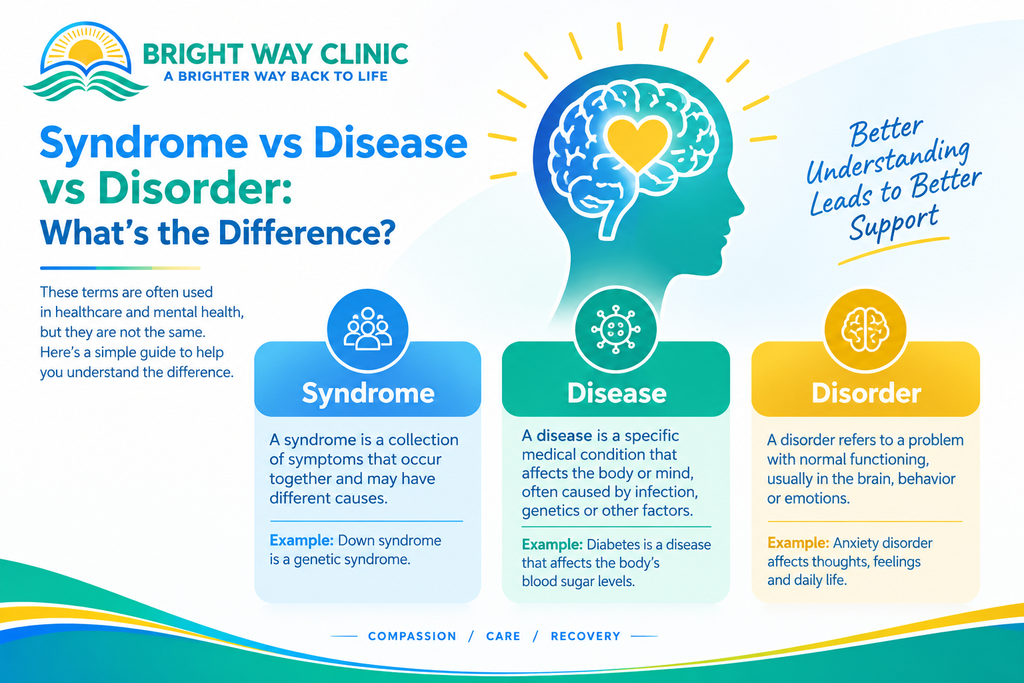
Disease, Disorder, and Syndrome
When people talk about their health, the words disease, disorder, and syndrome often get used interchangeably. But in medicine, each term has a distinct meaning — and understanding the syndrome and disease difference can help you make sense of a diagnosis, ask better questions, and get the right kind of care.
What is disease?
Disease is a condition that has a specific and identifiable underlying cause – usually producing a recognizable pattern of no germs ( physiological breakdown ), recognizable pattern, or signs and symptoms in the body system. Diseases can usually be diagnosed through specific tests, and they follow a known and predictable path from cause effect.
Examples of syndrome disease difference:
- Malaria -develops when mosquito bites introduce harmful parasites into the human body.
- Diabetes — caused by the body’s inability to produce or use insulin properly
- Chickenpox — caused by the varicella-zoster virus
In each case, there’s a clear biological cause you can point to and, often, test for directly.
How Is a Disease Diagnosed?
Diseases are usually diagnosed through direct and objective tests — such as blood tests, X-rays, MRI, CT scans, cultures, genetic tests, or biopsies — as their cause is detectable and measurable. Oftentimes the doctor can confirm the disease based on laboratory results rather than just relying on the patient’s statement of symptoms.
How Is a Disease Treated?
Since the cause of a disease is usually known, treatment is often targeted directly at the cause — antibiotics for bacterial infections, insulin therapy for diabetes, antibiotics medication for malaria . “It” is sometimes called “curative” or “causally directed” treatment, as opposed to just managing symptoms .
What are syndromes? (Syndrome vs Disease)
A syndrome is a cluster of signs and symptoms that occur permanently together, but where the actual underlying cause is unknown, polynomial, or not fully understood . A syndrome is identified by its pattern, not necessarily for any one confirmed reason .
Examples of syndromes:
- Down syndrome-is caused by an additional replication of chromosome 21 ( the cause is known, but it is called Syndrome because it generates a recognizable cluster of physical and developmental characteristics rather than a single disease process )
- Irritable bowel syndrome ( IBS) – a group of digestive symptoms for no confirmed cause ( bloating, pain, altered intestinal habits )
- Metabolic Syndrome Syndrome-a cluster of conditions ( high blood pressure, high blood sugar, excess abdominal fat, abnormal cholesterol ) that occur together and increase the risk of heart disease and diabetes.
How is the syndrome diagnosed?
Why is Down syndrome called “syndrome” instead of disease?
Down syndrome is not exposed to disease because it does not arise as a result of a disorder in the function of an external pathogen ( ) or a single organ; rather, it is a genetic condition in which an additional chromosome leads to a combination of specific characteristics ( growth-related, physical and cognitive). Since it appears in the form of a recognizable syndrome of term rather than a single disease process, the clinically correct exploitation is ’ syndrome’.
How is the syndrome diagnosed?
Since a syndrome is defined by a sample of symptoms rather than a confirmed biological cause, the diagnosis usually depends on medical standards – a doctor who compares a combination of the patient’s symptoms against a recognized checklist ( such as the Rome standard for abs, or the diagnostic standard for syndrome). Lab tests can support diagnosis, but they don’t confirm it the way a blood test confirms a disease .
Since a syndrome is defined by a sample of symptoms rather than a confirmed biological cause, the diagnosis usually depends on medical standards – a doctor who contrasts a combination of the patient’s symptoms against a recognized checklist ( such as the Rome standard for IBS, or the diagnostic standard for syndrome). Lab tests can support diagnosis, but they don’t confirm it the way a blood test confirms a disease.
How is the syndrome treated?
Since often a single cause of the syndrome is not recognizable, treatment focuses on managing individual symptoms and improving quality of life rather than curing the underlying pathogen . For example, IBS is administered through dose changes, stress management, and medications for specific symptoms, rather than a ” cure.”
What is a Disorder?
Difference between syndrome and disorder
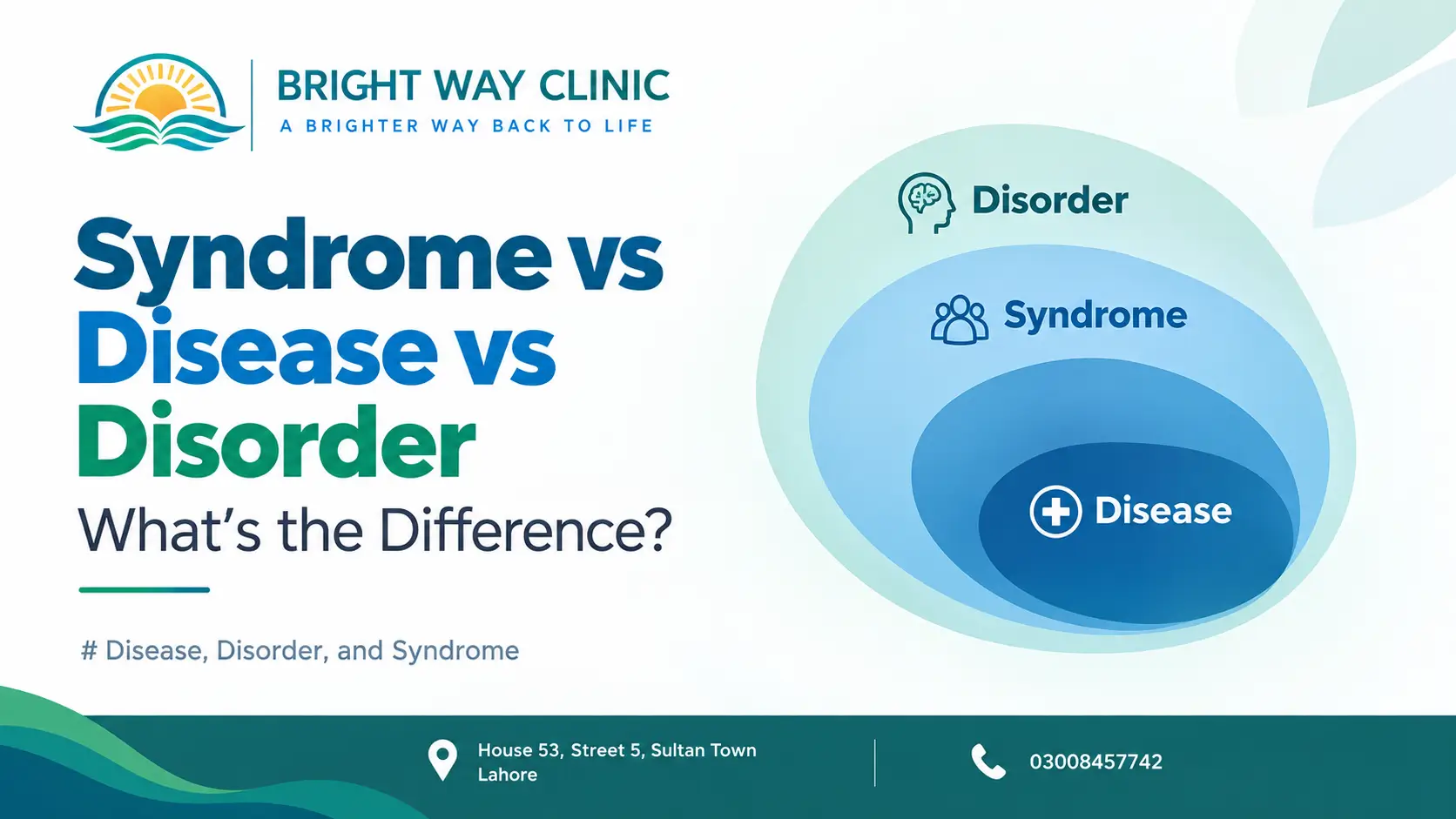
A disorder is a broader, umbrella term for any disruption to normal physical or mental function — structural, chemical, or behavioral. It doesn’t require a confirmed single cause the way a disease does, and it doesn’t require the “recognizable symptom cluster” definition a syndrome does. It simply refers to an abnormality in how the body or mind is working. In fact, both diseases and syndromes can technically be described as types of disorders — “disorder” is the umbrella, while “disease” and “syndrome” are more specific ways of classifying why and how that disruption happens.
Examples of disorders:
- Anxiety disorder — a mental health disorder involving excessive, persistent worry
- Bipolar disorder — a mood disorder marked by shifts between depressive and manic states
- Eating disorders — conditions that can affect a person’s eating habits and how they view their body.
- Sleep disorders — such as insomnia or sleep apnea, involving disrupted sleep patterns
How Is a Disorder Diagnosed and Treated?
Disorders — especially mental health and ( functional ) problems-are usually diagnosed through medical reviews, standardized questionnaires and behavioral testing rather than any one laboratory test . Their treatment is usually multi-pronged including therapy, medication, lifestyle changes and continuous care, as it aims to restore functions ( functionality ) rather than eliminate any one specific cause .
So Where Does “Condition” Fit In?
You’ll often hear doctors use the word condition instead of disease, disorder, or syndrome — and that’s usually deliberate. “Condition” is the broadest term of all: it simply means any state of health that isn’t considered normal, without making any claim about the cause or the symptom pattern. A disease, a disorder, and a syndrome are all, technically, “conditions.” Doctors often reach for this neutral word specifically when they don’t want to imply a cause, a severity level, or a specific classification before all the facts are in — which is also why you’ll see it used a lot in this article.
Syndrome vs. Disease vs. Disorder: Key Differences
difference between disease and disorder and syndrome
| Aspect | Disease | Syndrome | Disorder |
| Cause | Specific, identifiable | Often unknown or multifactorial | Varies — structural, chemical, or behavioral; not always identifiable |
| Diagnosis | Direct testing (blood work, imaging, cultures) | Recognized by pattern of symptoms / clinical criteria | Clinical evaluation, behavioral assessment, standardized criteria |
| Definition basis | Underlying pathology | Cluster of co-occurring symptoms | Disruption to normal function (physical or mental) |
| Treatment focus | Targets the root cause | Manages the symptom cluster | Restores function; often multi-pronged |
| Example | Malaria, diabetes, chickenpox | IBS, metabolic syndrome, Down syndrome | Anxiety disorder, bipolar disorder, eating disorders |
In short: a’ disease ‘has a known cause that can usually be diagnosed or examined; a ‘syndrome’ is a recognizable cluster of symptoms whose underlying cause cannot be fully understood; and a ‘disorder’ is the broadest term, involving any disruption of physical or mental functions-and includes many diseases and syndromes.
Common Examples in Women’s Health
Some of the most talked-about conditions in women’s health sit right at this disease-vs-syndrome distinction:
Irritable Bowel Syndrome
The word syndrome is a clear example of IBS why it exists in everyday life . It is diagnosed almost entirely on the basis of a combination or style of symptoms — such as recurrent abdominal pain associated with intestinal functions, bloating, and an irregular number or composition of waste excretion — not on the basis of a single test result.
Doctors usually diagnose other medical problems by diagnosing the symptoms and comparing them with the set standards, not by identifying a certified biological cause . This is why it is called syndrome rather than disease, although its symptoms are extremely real and can have a significant impact on the life of the day-to-day stages .
Polycystic syndrome (PCOS)
A hormone-related condition that is identified by a combination of symptoms ( irregular periods, excess, ovarian or cysts formation in the ovary) and has no one single cause, which is why it is placed in the syndrome instead of the disease .
Chronic Fatigue Syndrome
Persistent and inexplicable fatigue accompanied by other symptoms ( such as poor sleep, mental or cognitive difficulties, muscle pain), and of which a specific biological cause has not been isolated.
Why is it important for women’s health?
Conditions such as PCOS and Chronic Fatigue syndrome are often underdiagnosed or ruled out because they are syndromes rather than diseases with a single clear test . “”Syndrome” does not mean “less real” – it means that the condition is defined by a pattern rather than the result of a single lab – is important for patients advocating proper diagnosis and treatment .
The role of Central sensitivity syndrome ( CSS)
Central syndrome is an umbrella correction for a group of related conditions – including, fibromyalgia chronic fatigue syndrome, and is-that share symptoms associated with central nervous system pain and how to act on sensory signals. These conditions illustrate exactly why the traditional model doesn’t always fit real patient experiences.
The “Disease Entity” Assumption
For most of modern medicine, diagnosis has leaned on what’s called the “disease entity” model: the assumption that every illness works the same way a disease does — one specific cause, leading to one measurable diagnosis, leading to one targeted treatment. It’s a useful model, and it works well for conditions like malaria or chickenpox, where the cause really is that clean and traceable.
But conditions like IBS, fibromyalgia, PCOS, and Chronic Fatigue Syndrome don’t fit that mold — there’s no single pathogen or lesion to point to, even though the symptoms are consistent and real. Rather than force these conditions into the “disease entity” box, medicine classifies them as syndromes: recognizable by their pattern, valid as diagnoses, but not reducible to one single, isolated cause. Assuming every condition must have a single “disease entity” behind it is exactly the assumption that led many syndromes — especially ones that disproportionately affect women — to be dismissed or under-diagnosed for years.
Medical Terminology and Communication
Part of why this difference matters in practice comes down to communication . When a doctor tells a patient he has a “disease,” it often ( rightly or wrongly ) signals something serious and well-defined . “When” syndrome ” or “disorder” comes instead, some patients hear it as ambiguous or less legitimate – although medically this exploitation does not really mean that . Clear communication about what these words do and what they don’t do helps patients understand their diagnosis accurately, avoid unnecessary alarms or dismissals, and ask your care team more informed questions about what will happen next.
FAQs
Syndrome vs disease: Is a syndrome a disease?
Not exactly.Syndrome is a group of symptoms that appear together, when the disease has a specific and identifiable cause. Some syndromes, when their cause is fully understood, can later be reclassified as disease.
What is the example of Syndrome?
Down syndrome , bowl syndrome ( IBS), syndrome, and Metabolic syndrome (chronic fatigue syndrome ) are common examples of this.
What are the three types of Syndrome?
In general, syndromes can be classified into these types: genetic syndrome ( e.g. Down syndrome), syndrome cluster based on a combination of symptoms ( e.g. IBS, Chronicle Fatigue syndrome), and or systemic syndrome (e.g. Metabolic syndrome).
What is the difference between Disorder and Syndrome?
Syndrome is a specific and identifiable combination of symptoms that usually appear together. The disorder is a broad exploit used to disrupt any type of physical or mental function; the syndrome can be considered a type of disorder, but not every disorder syndrome can be called, because many disorder ( such as most mental health problems disorders ) are not defined by this specific cluster combination of symptoms in the way that syndromes are done .
What is the difference between disease and disorder?
The disease has a specific and identifiable biological cause ( such as a pathogen, a genetic defect,, or correct functioning of an organ ) that can usually be confirmed through tests. ‘Disorder’ is a broader exploit that describes any disruption of physical or mental functions, and there may be a definitive cause and not. Every disease can be called a type of disorder, but not every disorder is a disease.