
Smart Phone Addiction Treatment · Lahore
Cell Phone Addiction Treatment in Lahore
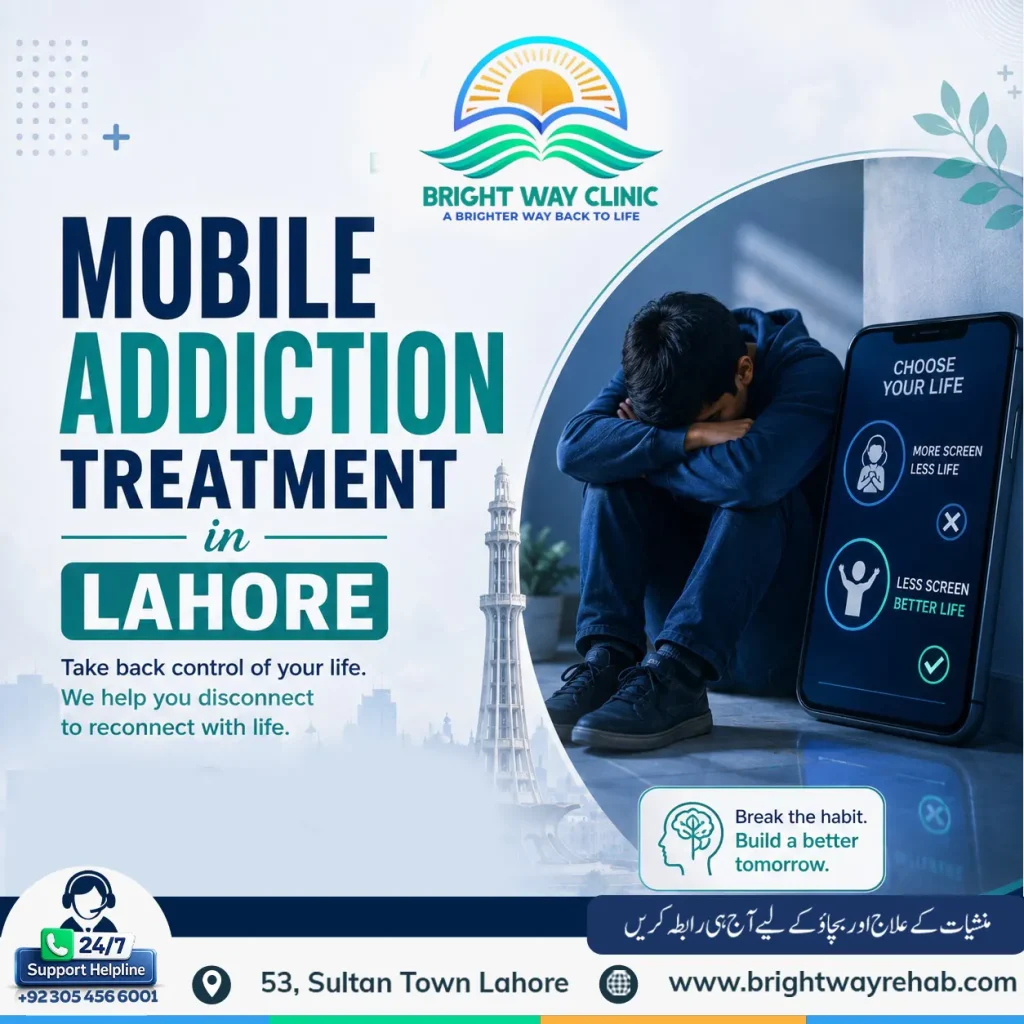
Smartphones are made to hold our attention. Every alert, every scroll, every buzz is designed to pull us back in. For many people in Lahore, this has turned into a real problem — checking the phone again and again, losing sleep, and never putting it down. If this sounds like you or someone you love, The Bright Way Rehab offers a proper, medically guided mobile phone addiction treatment in Lahore.
Our program helps people build a healthier relationship with technology, with no shame and no judgment. Some people call it mobile phone addiction, some call it mobile addiction, others simply say phone addiction. Whatever the name, more and more families in Lahore are searching for real solutions — and real help is now available close to home.
Patients treated
Experience in Lahore
Support for families
Mobile Phone Addiction Treatment · Lahore
Are You Addicted to Your Phone?
Mobile phone addiction, also known as smartphone addiction or notification (fear of being without your phone), is a behavioral addiction – that is, there is no substance involved, but the brain reacts in such a way as to how it reacts to drugs or alcohol. Each notification triggers a small release of the brain’s “reward” chemical, dopamine, which continues to pull users back for more.
This is not just the use of a heavy phone. It becomes an addiction when the phone begins to control rather than support everyday life — disrupting sleep, work, relationships and even physical health. Mental health experts increasingly recognize digital and screen addiction as a real medical concern, not just a bad habit.
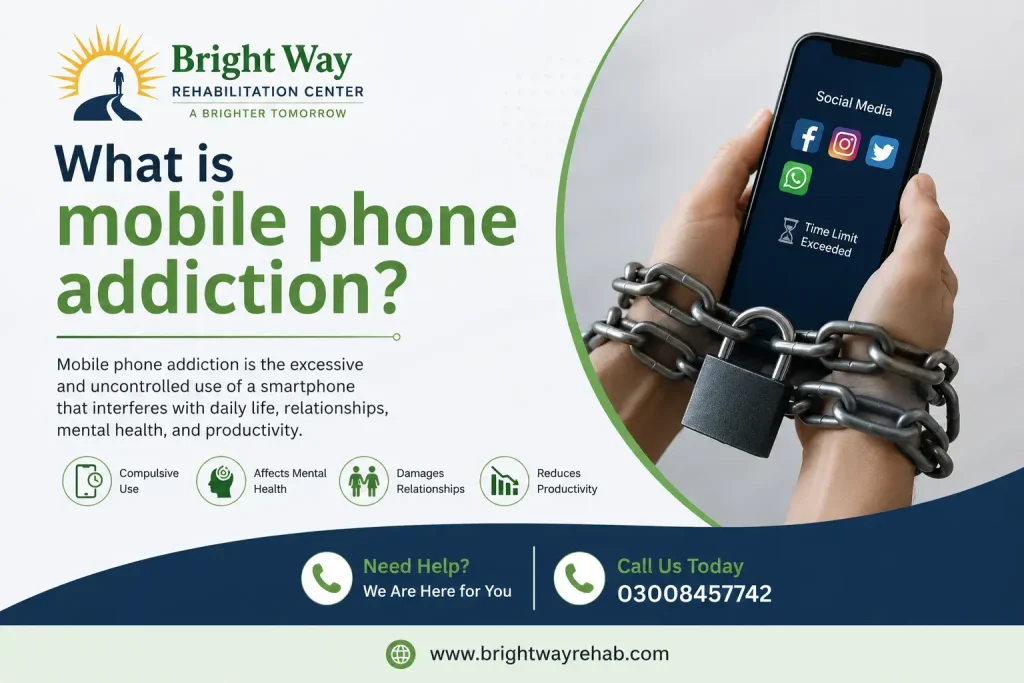
Simply put, the definition of smartphone addiction reaches it: compulsive, hard-to-control phone use that continues despite being harmed. Not paying attention, mobile phone addiction can cause psychological problems ranging from increased anxiety to persistent low mood, which is why early, professional attention is important.
Root Cause
Why do people get used to their phones?
Several factors work together to make it so difficult to put down smartphones:
Dopamine loop
Each like, message, or notification provides a small reward, training the brain to keep testing.
Fear of getting lost (FOMO)
Social media creates constant pressure to stay updated on what others are doing.
Escapism
phones provide easy distractions from stress, boredom, or difficult emotions.
Fear of disconnection
Many people feel worried about being inaccessible, even briefly.
Self-app design
Unlimited scrolling, autoplay, and push notifications are designed to maximize screen time.
Understanding these triggers is the first step in treatment-it helps patients understand why they are reaching for their phones, there is no reason. Understanding the real reasons for connecting to a mobile phone-not just a lack of willpower-is what allows you to recover for a long time
Left Untreated
The effects of mobile phone addiction
Untreated, excessive phone use can affect almost every part of a person’s life:
- Sleep disturbances and chronic fatigue
- Increased anxiety, stress and irritability
- Low concentration and academic or work performance
- Withdrawal from real-world relationships and social isolation
- strain in the neck, back and wrists ("text neck" and frequent bumps from excessive pressure)
- Eye strain and headache when in front of the screen for a long time
- Decreased self-esteem, which is often associated with related on social media
- In more severe cases, the relationship to depressive symptoms and low mood
These effects rarely appear overnight-they gradually form, which is why many people do not realize how deep dependence has become until it begins to affect their daily work. Taking together, these side effects of cell phone addiction are a strong indication that professional treatment, not just self-discipline, is needed.
Early recognition
Signs and symptoms of phone addiction
Early recognition of warning signs makes treatment more effective. Common symptoms include:
Constant desire to check the phone – even without notice.
Prioritizing the phone over people and responsibilities — food, meetings, and conversations take place in the back seat.
Loss of time during scrolling, often times lost without being seen.
Irritability or anxiety when the phone is not near.
The need for a phone to feel calm, especially in moments of boredom or stress.
Symptoms such as withdrawal — anxiety, low mood, or difficulty focusing on detaching from the device.
If several of them are applied consistently, it may be time to seek professional help instead of trying to manage alone. Many are shocked to learn that the symptoms of withdrawal from phone addiction — anxiety, irritability, difficulty concentrating-are a real, acknowledged part of the picture, not just exaggeration
Mobile phone addiction in children and Teenagers
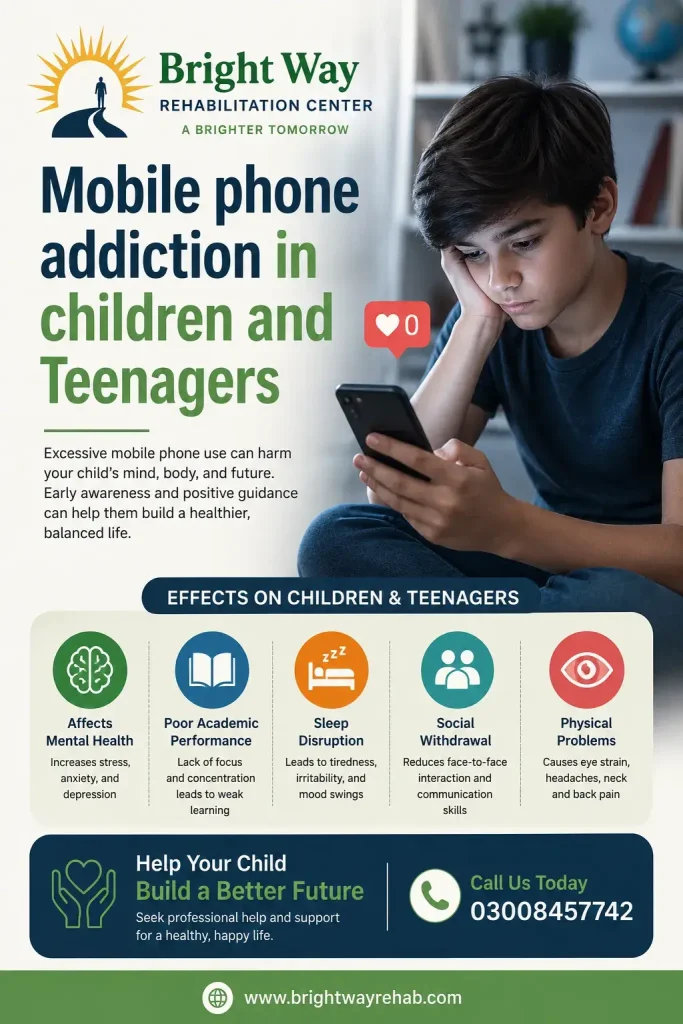
Children and teenagers are particularly vulnerable, as their self-control and mobility regulation are still developing. Warning signs in young users may cause:
- Loss of interest in falling grades or schoolwork
- Meltdown or extreme resistance when the phone is snatched
- Excessive time spent on mobile games or social apps
- Withdraw from family activities and outdoor sports
- Sleeping with the phone or using it late at night
If your child seems to be connected to their phone in a way that feels unhealthy, early intervention – combined with family counseling – produces excellent results. It also applies to children with smartphone addiction and phone addiction at a young age as it does to adolescents, and can also appear as a young child who is addicted to a cell phone or tablet that is constantly used as a child care tool. Whatever age, helping with phone addiction for teens and young children works best when it starts early.
Know the difference
Mobile phone addiction vs. normal phone use: how to tell the difference
Normal Phone Use
- Tied to real needs — work, family, study or productivity
- No distress when the phone isn't available
- Doesn't come at the cost of sleep, relationships or responsibilities
Addiction
- Defined less by hours, more by loss of control
- Repeated attempts to cut back that don't succeed
- Real anxiety or irritability when the phone is inaccessible
- Sleep, exercise and personal conversations are consistently pushed aside
A growing concern
Addiction to mobile gaming and social media
A big part of the cell phone addiction cases we see are not about calls or messages-they are about mobile gaming and social media.Games such as Pubg Mobile and other different multiplayer games tournaments are based on cash prizes, ratings and social pressure from colleagues, which makes it especially difficult for teenagers to distance themselves from them
Before, or alongside, treatment
Simple steps to reduce phone addiction at home
Before or with professional treatment, a few practical changes may begin to reduce dependence:
Turn off unnecessary notifications
The most forced checks start with warnings, not a real requirement.
Set phone-free zones and hours
Keep the bedroom and the dinner table free of screens.
Track and cap screen time
Use it pre-existing to manage screen time usage and set daily limits
Replace scrolling with an activity
A small walk, a call to a friend, or even just five minutes of stretching — rather than "just stopping.
Charge your phone outside the bedroom
Charge your phone out of the bedroom to get it out of the habit of checking first thing in the morning and last thing in the night .
These measures can reduce mild to moderate overuse, but if you’ve tried this type of self-regulation over and over again without lasting success, it’s usually a sign that core dependencies need professional, structured collaboration.. In short, learning how to get rid of mobile addiction, how to overcome phone addiction, and breaking phone addiction patterns for good usually requires a combination of Home Strategies and professional guidance.
Checking in with yourself
Self-diagnosis: is it time for a phone addiction test?
If you’re unsure whether using your phone has turned drunk, self-assessment tools can offer a useful starting point. The most commonly used smartphone is the addiction scale (SAS), a validated questionnaire on mobile phone addiction developed by researchers and often cited with the short mobile phone addiction scale. Versions of the scale of smartphone addiction, including SAS PDF formats, are available in academic literature for those who want a structured, scored questionnaire instead of the informal phone addiction test or “phone addiction purity test” found online.
These tools may offer useful insights, but they are not a substitute for a proper medical diagnosis – a self-assessment may suggest there may be a problem, while a professional assessment in the Bright Way Rehab confirms this and maps the path to the right treatment.
For those interested in basic evidence, a growing Institute of mobile phone addiction research paper continues to document the growing statistics of smartphone addiction around the world, reinforcing why treatment structure options are increasingly necessary.
Our Proces
Our mobile phone addiction treatment process in Lahore
If several of them are applied consistently, it may be time to seek professional help instead of trying to manage alone. Many are shocked to learn that the symptoms of withdrawal from phone addiction — anxiety, irritability, difficulty concentrating-are a real, acknowledged part of the picture, not just exaggeration
Evaluation
Evaluation-a confidential evaluation to understand patterns of use, stimuli, and underlying emotional factors.
Digital detox planning
Digital detox planning-a gradual, realistic plan to reduce screen dependence without causing unnecessary distress.
Cognitive behavioral therapy (CBT)
Cognitive behavioral therapy (CBT) - helping patients identify thought patterns that drive overwhelming phone use and replace them with healthy coping strategies.
Family counseling
Family counseling-engaging parents in building a particularly important, healthy home routine for children and adolescents.
Follow-up and relapse prevention
Follow - up and relapse prevention-ongoing check-in to keep growth and prevent it from returning to old patterns.
All treatment is confidential and medically supervised, with support available for both self-referral and family initiated interventions.
Why choose Brightway rehab?
- 13,000+ patients were treated in various addiction and mental health programs.
- 12+ years of medical experience in Lahore
- 24/7 support for patients and families
- Located next to the facility on Raiwind Road, Lahore, Lahore, near Thokhar Niaz Baig.
- A confidential, free space focuses on long-term change rather than quick problem solving
Questions
Frequently Asked Questions
How do I know if I am addicted to my phone?
If you feel uncomfortable without a phone, waste hours, or if they interfere with your sleep, work or socialization, this may indicate addiction. A professional diagnosis can confirm this and lead to the right treatment.
How is mobile phone addiction treated ?
This is a structured program that includes evaluation, a digital detoxification plan, therapy (usually CBT) and follow-up care to help patients regain control of their phone usage .
Can teens get rid of phone addiction ?
Yes teens often respond very well to treatment, especially when family counseling is added, because constant routines at home significantly improve results.
Where can you find a cure for mobile addiction in Lahore?
Bright way rehab, located on rayonde Road near stumblebee’s, offers specific mobile and screen addiction treatment programs for both adults and adolescents.
How long does treatment take?
The duration varies individually — some patients see meaningful change within a few weeks, while more complex cases may require a few months of structural support.
Is there a secret to treatment?
Yes, complete confidentiality is maintained throughout the entire diagnosis, treatment and follow-up process .
My kid is addicted to his phone or games-what should I do?
Start with open, non-contradictory conversations, then come for a professional evaluation . An attempt to force sanctions without addressing the root cause is often turned upside down.
Does Brightway rehab offer online consultations?
Yes, online advice is available for early diagnosis, suggesting in-person sessions for ongoing therapy.
Get help today.
You don’t have to solve this alone. Even if you or a family member is in trouble, reaching for help is a sign of strength, not weakness.. Call 0300-8457742 or text us at WhatsApp for a free, confidential consultation — the first step towards a healthy relationship with technology begins with a conversation.