Anxiety Meaning in Urdu: انزائٹی کیا ہے؟
It’s the morning of the result. Or the night before a big meeting. Or just an ordinary Tuesday, and for no reason you can name, your chest feels tight and your thoughts won’t slow down. You tell yourself to calm down, but that never works.
If that sounds familiar, you’ve probably searched for the anxiety meaning in Urdu, and this page is written for you. In one line: it’s اضطراب، بے چینی، گھبراہٹ.This is more important than what these words mean, how they make you feel, and when it’s time to help hustle
Quick answer: What is anxiety in Urdu? انزائٹی وہ مسلسل فکر اور خوف ہے جو حالات سے بڑا ہو جاتا ہے اور ذہن کے ساتھ جسم پر بھی اثر ڈالتا ہے۔ In English: worry and the fear and the worry that has for a longer period of time and the pain is more intense, and the fear of both the spine and the body.
انگلش لفظ Anxiety کا اردو میں مطلب بے چینی، گھبراہٹ، ذہنی پریشانی اور اضطراب ہے۔
– قدرتی ردِعمل: انزائٹی دراصل کسی غیر یقینی صورتحال، ذہنی دباؤ یا ممکنہ خطرے کے پیشِ نظر جسم اور دماغ کا ایک قدرتی ردِعمل ہے۔ یہ انسان کو محتاط رہنے اور ممکنہ خطرے سے نمٹنے کے لیے تیار کرتا ہے۔
– نفسیاتی کیفیت: جب بے چینی، خوف اور پریشانی کی کیفیت مسلسل برقرار رہے، بار بار محسوس ہو یا روزمرہ زندگی کو متاثر کرنے لگے، تو یہ انزائٹی ڈس آرڈر (Anxiety Disorder) کی علامت ہو سکتی ہے۔ ایسی صورت میں ماہرِ نفسیات سے مشورہ لینا ضروری ہے۔
What Is the Meaning of Anxiety in Urdu? (اضطراب کا مطلب)
In Urdu, there is no such good word for it, and this is why people suffer from اضطراب. Urdu uses words like‘ anxiety’,‘ بے چینی ’and‘ گھبراہٹ’, and each of them indicates a different experience. ‘Anxiety’ refers to the state in which a person does not work to an urge , and he feels a strong desire to move. “Sadness” is the sudden inconvenience or heartbreak that accelerates, which can cause bad news that you feel bad before you get it. ‘اضطراب’.۔۔ is the heavier, more formal word, and it’s the one doctors use. In daily life, most people just say “انزائٹی” and everyone understands.
A fire alarm that goes off every time you cook, even when nothing is burning, is a decent picture of it. The alarm isn’t broken. It’s just too sensitive.
انزائٹی ذہن اور جسم کا وہ الارم ہے جو خطرہ نہ ہونے پر بھی بجتا رہتا ہے۔
The World Health Organization says anxiety is one of the common mental health problems. Whatever you are feeling, you are not alone. Anxiety touches people and you are joined by many others.
بے چینی (Bechaini) کو اردو میں کہتے ہیں:
چینی (Bechaini): دل یا ذہن کا بے سکون ہونا۔ ذہنی پریشانی یا گھبراہٹ Anxiety
ضطراب (Iztiraab) کو اردو میں کہتے ہیں:
اضطراب (Iztiraab): شدید ذہنی تناؤ، گھبراہٹ اور بے قراری کی کیفیت
بے چینی (Bechaini) کو English میں کہتے ہیں:
- Restlessness – بے چینی، سکون نہ ہونا
- Anxiety – ذہنی پریشانی یا گھبراہٹ
- Uneasiness – دل کا بے چین ہونا
- Agitation – شدید بے قراری
- Nervousness – گھبراہٹ
عام طور پر Restlessness سب سے مناسب لفظ ہے۔
اضطراب (Iztiraab) کو English میں کہتے ہیں:
- Anxiety – ذہنی اضطراب، پریشانی
- Distress – شدید ذہنی تکلیف
- Agitation – بے قراری، اضطراب
- Anguish – شدید ذہنی یا جذباتی اذیت
- Turmoil – اندرونی کشمکش
عام طور پر Anxiety یا Distress بہترین ترجمہ ہیں۔
مثال: I am experiencing anxiety.
(مجھے اضطراب محسوس ہو رہا ہے۔)
Here are the meanings of “Anxious “ “Angst,” and “Nervousness”, in Urdu.
People often find these words together so they are presented together.
English word Urdu What it means
Anxious پریشان، بے چین، فکرمند Feeling uneasy about something that might happen
Short jitters before an event such as viva or interview – Nervousness
Angst: Gahri beechini/ khulsh Uncontrolled fear of life or future, difficult to explain
Mental strain , or heavy load of problems, which causes stress in Urdu says ذهنی دباؤ / ذہنی تنا
اضطرابی عارضہ or anxiety disorder: it is an anxiety that lasts a long time, is intense, and interferes daily working.
In Urdu, “Anxious “: this feels uneasy or worried.
a person who is uncomfortable or anxious.
So what is the meaning of anxious in Urdu in a real sentence? “I’m anxious about tomorrow’s exam” becomes “مجھے کل کے امتحان کی فکر ہے” or “امتحان سے پہلے مجھے گھبراہٹ ہو رہی ہے۔”
Angst meaning in Urdu: “angst” came into English from German. It doesn’t point at one specific worry. It’s more of a background heaviness, a sense that something is wrong with life itself, and the closest Urdu is “گہری بے چینی”.
Worry or Anxiety Disorder: What’s the Difference?
Feeling nervous before a hospital report is normal. The worry fits the moment, and it fades when the moment passes.
The anxiety disorder meaning in Urdu is different, and it’s usually described as اضطرابی عارضہ. Here the fear stays for weeks, feels far bigger than the problem, and slowly starts making decisions for you. You skip a cousin’s wedding. You avoid travel. You check the gas stove four times. You lie in bed rehearsing conversations that haven’t happened.
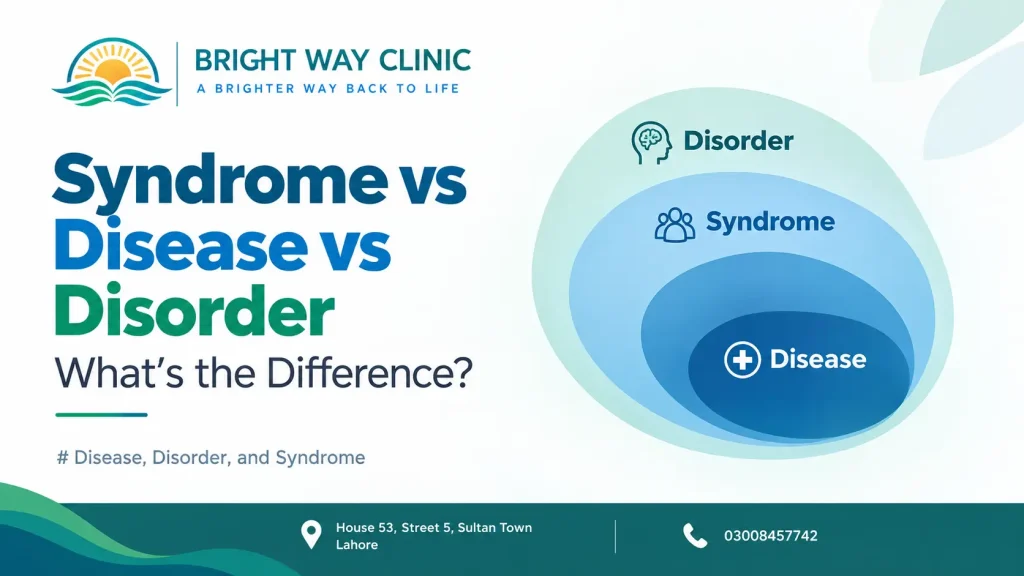
If you’ve ever wondered how words like condition, disorder and disease differ in medicine, our guide on disease vs disorder explains it clearly.
Anxiety or Just Stress?
The two are easy to mix up because both feel like pressure and pressure is the feeling.
| Stress | Anxiety | |
| Trigger | Usually clear: a deadline, a bill, an argument | Often unclear, or a fear of “what if” |
| When it eases | When the problem is solved | Can stay even when life is calm |
| Main feeling | Pressure and tension | Fear and dread |
One more thing worth knowing.
If stress continues for months it can gradually become anxiety – so don’t take it lying down.
Anxiety Ki Alamat: Anxiety Symptoms in Urdu (اضطراب کی علامات)
Anxiety doesn’t stay in the head. The body joins in, and that’s often why people don’t recognise it. These are the anxiety symptoms in Urdu that come up most.
ذہن اور جذبات (Mind and emotions)
- ہر وقت کسی نہ کسی بات کی فکر
- یہ احساس کہ کچھ برا ہونے والا ہے
- چھوٹی باتوں پر غصہ یا چڑچڑاپن
- دھیان لگانے میں مشکل
- ایک ہی خیال کا بار بار گھومتے رہنا
جسم (Body)
- دل کی دھڑکن تیز ہونا
- سینہ بھاری ہونے یا سانس رکنے کا احساس
- ہاتھ پاؤں کانپنا یا ٹھنڈے پڑ جانا
- پسینہ آنا اور منہ خشک ہونا
- پیٹ میں مروڑ، متلی یا بھوک کم لگنا
- سر درد اور چکر
- نیند نہ آنا اور مسلسل تھکن
رویے میں تبدیلی (Behaviour)
Some signs aren’t feelings at all. They’re things a person quietly stops doing: cancelling plans, staying home, putting work off in case it goes wrong, asking “are you sure it’s fine?” again and again, or watching marks and performance slip with no clear reason.
I sometimes mix them up. Both feel like pressure and pressure is the feeling.
The symptoms are real. They simply don’t come from a damaged organ.
[ADD: one real observation from your team, such as which symptom people mention first when they arrive.]
Main Types of Anxiety
anxiety is worry about many things at once, with no off switch.
Social anxiety is a fear that people will judge you. In Urdu social anxiety is described as “لوگوں کا سامنا کرنے کا شدید خوف.” This feeling goes beyond just being shy. A person, with anxiety might avoid eating in front of others or skip family dinners for weeks.
Panic disorder involves repeated panic attacks and a constant fear of having another.
Social anxiety secondly, there is an unpleasant fear of being mischievous. Social anxiety is converted to Urdu “”لوگوں کا سامنا کرنے کا شدید خوف””, and this is far beyond shame. The other person can avoid the front box or have a family day for weeks or Saturday.
The disorder of Panic is the repeated Panic that attacks the constant fear of the next one.
Panic Attacks in Urdu (گھبراہٹ کا دورہ)
Sounds like a wave of fear that comes too quickly. Panic attack, in Urdu گھبراہٹ کا دورہ اچانک آنے والی شدید خوف کی لہر ہے جو چند منٹوں میں عروج پر پہنچ جاتی ہے. In talk people often say talk people use “پینک اٹیک” and “انزائٹی اٹیک” for it. to talk about this feeling. Panic attack symptoms are a heartbeat, a feeling that the heart is swelling دل کی تیز دھڑکن، سانس پھولنا، کپکپی، پسینہ، چکر، سینے میں جکڑن اور یہ ڈر کہ شاید موت قریب ہے۔ , trembling, sweating, dizziness, a tight feeling, in the chest and a very strong fear that death may come soon.
The panic attack. state reaches its point in about ten minutes and then it fades away.
Do not neglect pain as a panic attack. Depression and panic attack that understanding, why people perceive them as the same thing in Urdu
اضطراب اور ڈپریشن کا ایک ساتھ ہونا۔
| Anxiety | Depression | |
| Main feeling | Fear, worry, restlessness | Sadness, emptiness, numbness |
| Inner voice | “Something terrible is going to happen.” | “Nothing will ever get better.” |
| Energy | Wound up, tense | Heavy, slowed down |
| Sleep | Trouble falling asleep | Waking too early or sleeping too much |
Depression and anxiety symptoms in Urdu:
اضطراب (Anxiety) کا تعلق مسلسل سوچنے، گھبراہٹ، دل کی دھڑکن تیز ہونے اور بے چینی سے ہے۔The rhythm of anxiety (Depression ) is constantly thinking, disorienting, sharpening of the heart and anxiety.
Depression (Depression) includes symptoms such as sadness, loss of interest, fatigue, drowsiness that problems and changes in appetite.
These two conditions can be poisoned within a week and enhance each other even more.
To understand the other side properly, read depression kya hai.
What Causes Anxiety?
It’s rarely one thing. Usually a few pile up together:
- Family history. Anxiety does tend to run in families.
- Brain chemistry. The brain’s fear system may be a little too sensitive.
- Long-running pressure.
- Financial pressures, money troubles not having a job issues at home time, for exams.
- sad moment. Someone passing away an accident or something scary.
- Body problems. A doctor may do tests to check if something else is causing the anxiety. I think a doctor should find the root of the anxiety.
- Substances. Too much caffeine, or coming off alcohol, hash or sleeping pills.
[ADD: one or two real lines from your team about what families usually say or fear at the first visit.]
How to Deal With Anxiety Right Now
These steps calm the moment. They don’t cure anything.
Try the 3-3-3 method. Name 3 things you can see. Listen for 3 sounds. Then move 3 parts of your body, like your fingers, ankles and shoulders. It pulls your attention back from “what if” to “right now”. Follow it with slow breathing: in for 4 counts, out for 6, a few rounds.
Then the boring habits that quietly matter most. Cut back on caffeine, because four cups of chai and an energy drink won’t help. Keep a fixed bedtime.
Keep a fixed sleeping time. Take a walk of ten minute . On the paper of Write your worries down on smaller paper, Tell someone you trust. the cause is reduced somewhat and she begins to feel mild.
Don’t take sleeping or calming pills unless a doctor has prescribed them, and never start or stop anxiety medicine on your own.
Anxiety Ka Ilaj in Urdu:
Where to start .
The motivation is that anxiety responds well to treatment . Most projects start with talk therapy, especially CBT, which teaches you to feel anxious thoughts and respond to them differently . A psychiatrist can add medicine when needed, and lifestyle changes support both .
If you’re wondering what an assessment actually involves, read about anxiety and panic attack treatment in Lahore.
When Should You See a Doctor?
Don’t wait if the anxiety:
- Has lasted several weeks
- Is hurting your work, studies, sleep or relationships
- Is making you avoid places or people
- Keeps bringing panic attacks
- Is being “managed” with pills, alcohol or hash
If you have thoughts that hurt yourself, then immediately hassle help right now. . In Punjab, total Rescue 1122 or nearby hospital
Frequently Asked Questions
What are the 5 symptoms of anxiety?
Constant restlessness or anxiety, rapid heartbeat up and down , sleep disorders, irritability or difficulty concentrating, and muscle spasms or gastrointestinal disorders.
What is trouble in simple terms ?
Lasting fear or anxiety that is bigger than the situation and harder to close.
How to deal with anxiety ?
Ground yourself and breathe slowly in the moment, have a constant routine, reduce caffeine, trust someone, and see a doctor if it continues.
What is the best treatment for anxiety ?
CBT is the most recommended talk therapy. A psychiatrist can add medications in moderate or severe cases. The best plan depends on the person .
Does anxiety mean stress?
No, stress usually has a clear cause and blurred vision disappears when the problem is solved . Anxiety can continue without one.
3-3-3 what is the principle of anxiety ?
This is a basic composition: 3 things that you give, 3 sounds that you hear, and 3 such geniuses of the body that you move. It provides comfort for the time being, but there is no complete allowance for the anxiety disorder.
پریشانی کیا ہے؟ یہ ڈرہے۔ یہ ایک ژنی حالت ہے جس میں آدمی بہت بے چین اور بےقرار ہو جاتا ہے۔ یہ کسی کی نیند، کم اور رشتون پر اسر کر سکتی ہے۔
کیا ڈر کا الاج ممکن ہے؟ جی ہاں، درست داکتر اور مشاورت کہ ساتھ، زیادہ تر لوگ بھتر مہسوس کرتے ہیں اور باز مکمل شتیاب ہو جاتے ہیں۔ جلدی الاج سے جلدی بھتری ملتی ہے۔
پریشانی اور اداسی میں کیا فرق ہے؟ پریشانی میں خوف اور بےچینی ہوتی ہے، جبکہ اداسی میں سستی، کم دلچسپی اورنہ ہونا ہوتا ہے۔ اکسر لوگ دونون ایک ساتھ مہسوس کرتے ہیں۔