Top 13 Most Common Addictions in Pakistan
According to the research of the National Drug Use Survey Pakistan 2022-24, roughly 6.7 to 8.9 million individuals struggle with substance abuse. Addiction is becoming a serious health concern in Pakistan that affects a person’s physical health, mental well-being, relationships, education, and ability to work. In Pakistan, these issues are commonly seen among teenagers, university students, professionals, labourers, and older adults. Understanding the most common addictions in Pakistan can help families recognise them early and seek professional support before the condition becomes severe. This blog explains the top 13 most common addictions in Pakistan.
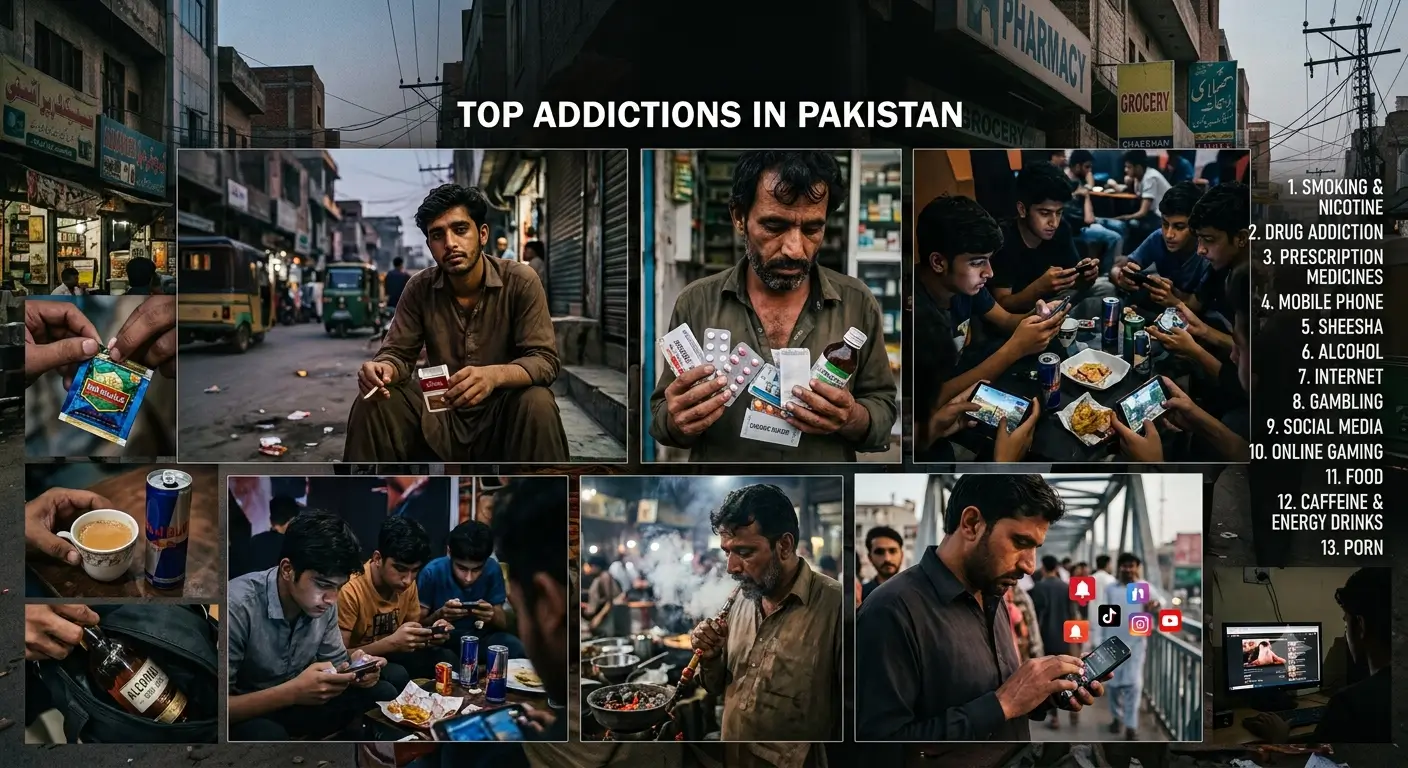
Top Addictions in Pakistan
1. Smoking and Nicotine Addiction
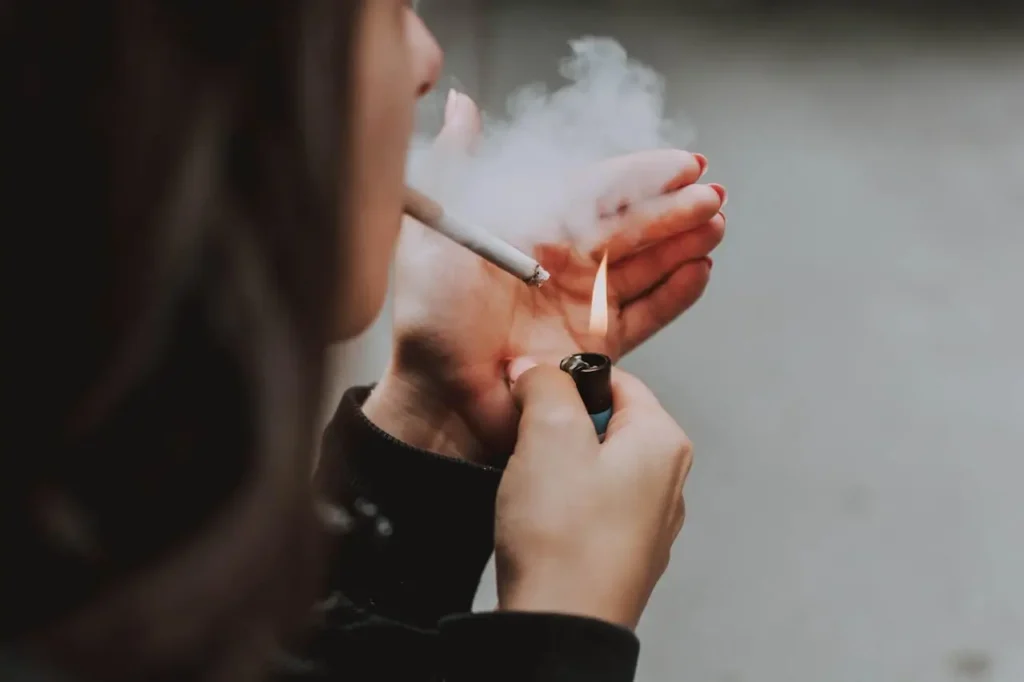
Tobacco and nicotine use is one of the most widespread addictions in Pakistan over time. Many users begin during adolescence due to peer pressure, curiosity, or social influence.
Common Forms of Tobacco Use
- Bidis
- Cigarettes
- Shisha
- Gutka
- Naswar
- Vapes and e-cigarettes
Common Signs
- Cravings for cigarettes or tobacco
- Irritability when unable to smoke
- Smoking immediately after waking up
- Increasing daily cigarette consumption
- Difficulty quitting despite health concerns
Health risks
- Lung cancer
- Heart disease
- Stroke
- Chronic bronchitis
- Oral cancer, especially with smokeless tobacco
2. Drug Addiction
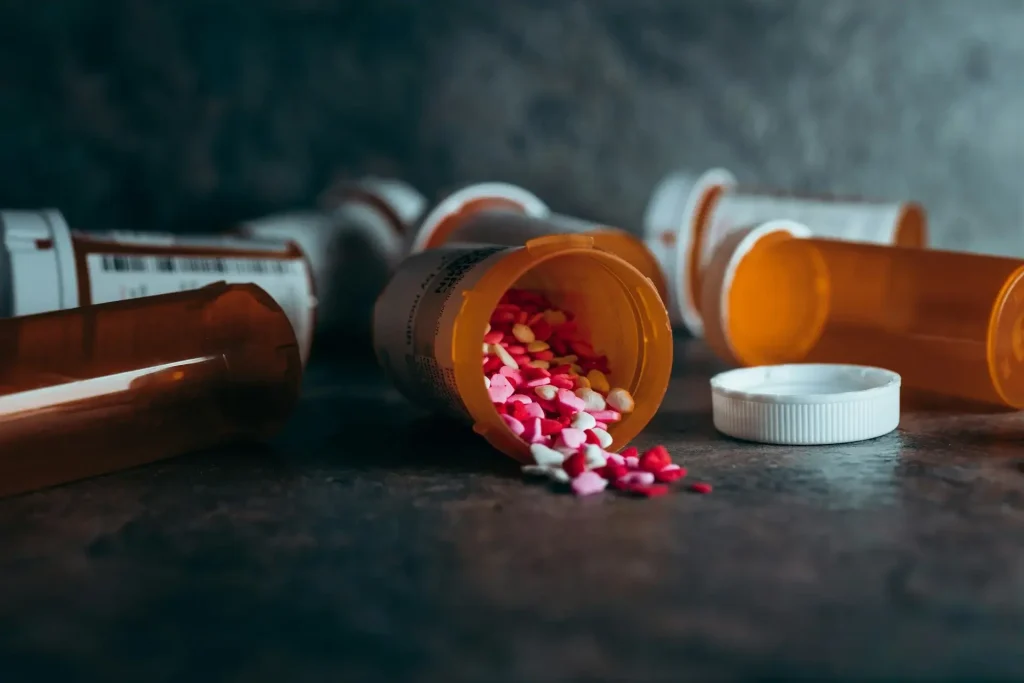
Drug addiction is the second most common addiction in Pakistan and affects people from different age groups. Drug use may begin due to peer pressure, stress, trauma, curiosity, or easy availability of certain substances. Commonly abused drugs include:
Commonly abused drugs
- Heroin
- Crystal Meth (Ice)
- Cocaine
- Cannabis (Hashish and Marijuana)
- Opioids
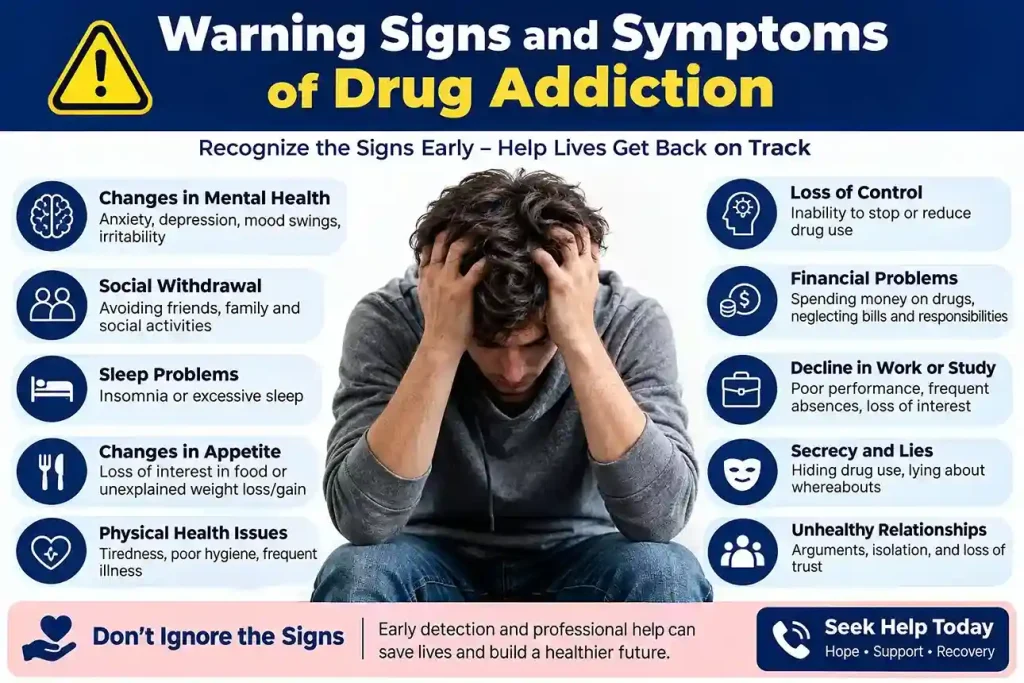
Common signs
- Sudden changes in behavior
- Neglecting responsibilities
- Poor academic or work performance
- Secretive behavior
- Financial problems
- Withdrawal from family and friends
Health Consequences
- Heart disease
- Liver damage
- Kidney failure
- Mental health disorders
- Increased risk of overdose
- Infectious diseases
3. Prescription Medicine Addiction
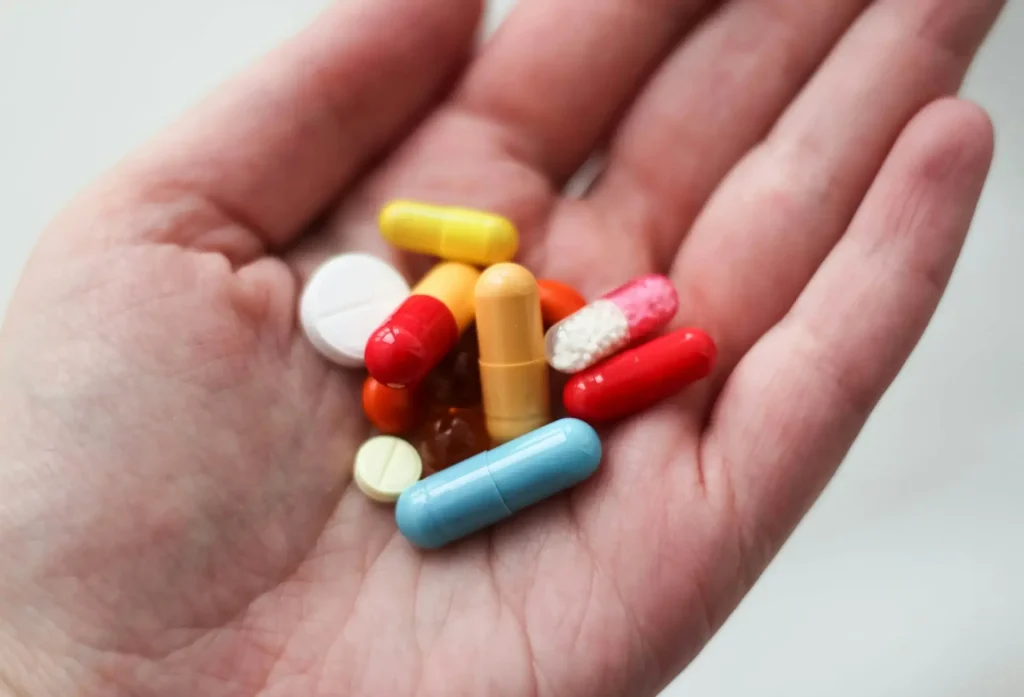
Some people become dependent on medicines that were originally prescribed for pain, anxiety, or sleep problems. Commonly misused medicines include:
Commonly misused medicines
- Sleeping pills
- Anti-anxiety medications
- Strong painkillers
- Certain cough syrups
Risk Factors
- Self-medication
- Long-term prescriptions
- Lack of medical supervision
Potential Consequences
- Physical dependency
- Cognitive impairment
- Organ damage
- Increased overdose risk
Warning signs
- Taking higher doses than prescribed
- Visiting multiple doctors for the same medicine
- Using medication to feel relaxed or “normal”
- Experiencing withdrawal symptoms when stopping
4. Mobile Phone Addiction
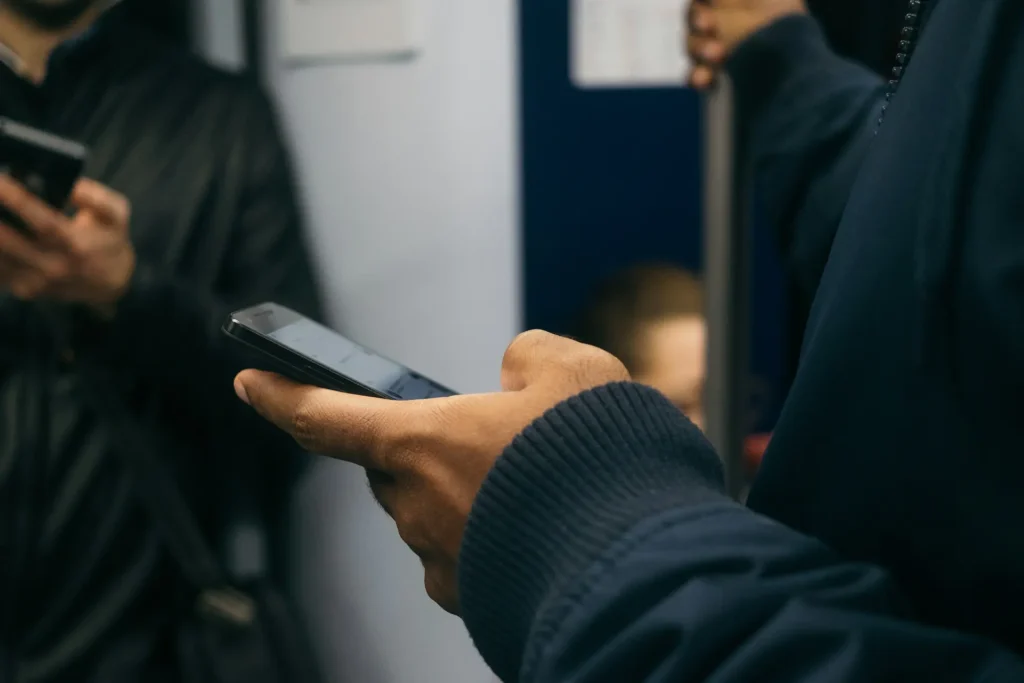
9 out of 10 families are facing issues with mobile phone addiction. Due to excessive misuse of mobile phones, people are becoming addicted.
Signs of Mobile Phone Addiction
- Constantly checking notifications
- Anxiety when separated from the phone
- Reduced face-to-face interactions
- Difficulty concentrating
Impact on Daily Life
- Poor sleep quality
- Reduced productivity
- Eye strain
- Neck and back pain
- Increased anxiety levels
5. Sheesha Addiction

Many people think shisha is safer than cigarettes. People consider it does not affect the way smoking does, but it also leads to nicotine dependence.
Why people become dependent
- Social gatherings
- Café culture
- Flavored tobacco
- Misconception that water filters all harmful substances
Regular sheesha use can affect the lungs and heart and may increase the risk of respiratory illness. Reducing frequency and seeking support can help users quit.
6. Alcohol Addiction
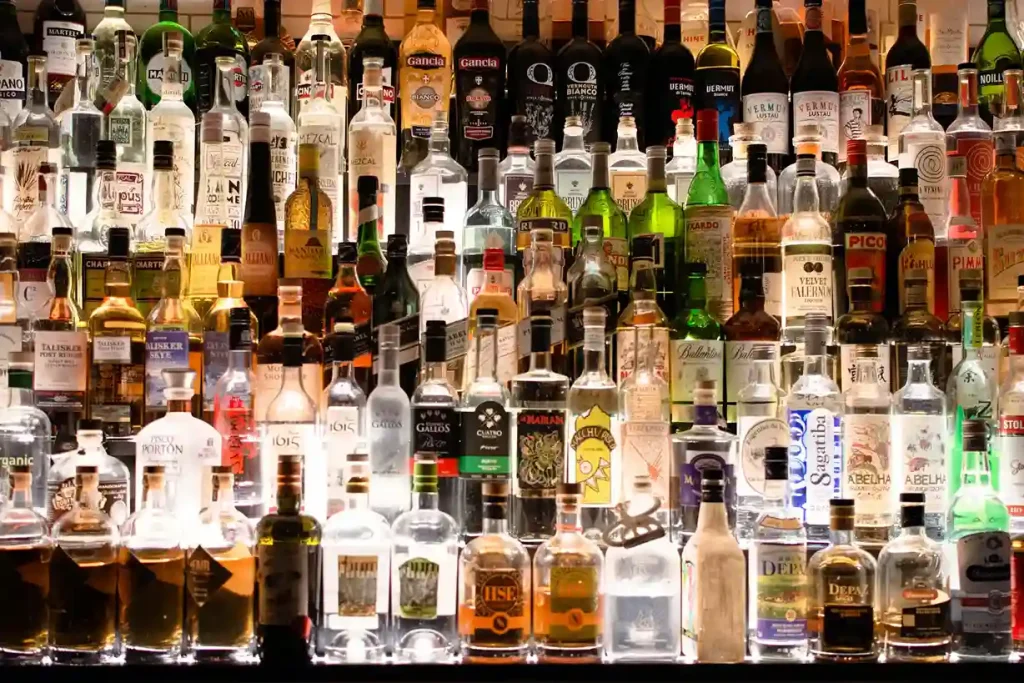
Alcohol consumption is less visible in Pakistan compared to other drugs, but alcohol addiction exists. It may occur among individuals who drink in private settings. That makes it far more dangerous than other addictions.
Warning Signs
- Drinking in secrecy
- Loss of control over alcohol intake
- Neglecting responsibilities
- Withdrawal symptoms when not drinking
Long-Term Effects
- Liver cirrhosis
- High blood pressure
- Brain damage
- Depression
- Relationship problems
7. Internet Addiction

Today 21st-century internet addiction has become increasingly prevalent, especially among teenagers and young adults. Excessive internet usage can interfere with daily functioning, productivity, and social relationships.
Common Online Activities
- Social media browsing
- Streaming videos
- Online gaming
- Endless scrolling
- Online chatting
Symptoms
- Spending excessive hours online
- Sleep disturbances
- Reduced physical activity
- Academic decline
- Social withdrawal
8. Gambling Addiction
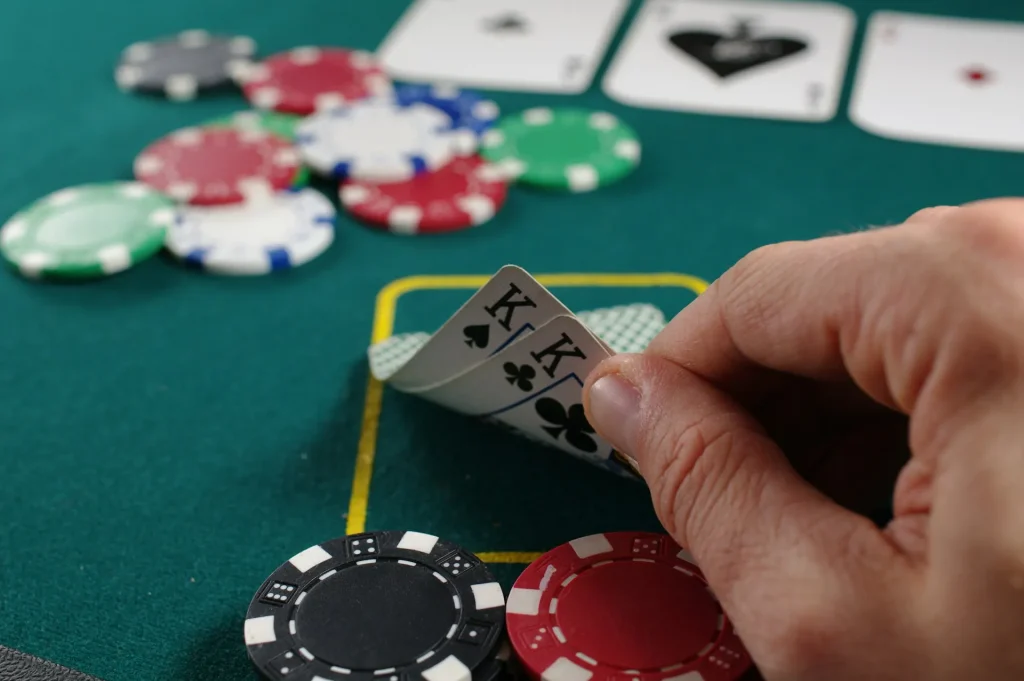
Gambling addiction is also one of the most common addictions in Pakistan, especially for people who are addicted to sports, online gambling platforms, card games, or other forms of wagering. With increased internet access, online betting has become easier to access.
Common Forms of Gambling
- Sports betting
- Online casinos
- Card games
- Lottery schemes
Signs of Gambling Addiction
- Chasing financial losses
- Borrowing money to gamble
- Hiding gambling activities
- Financial instability
Effects
- Debt accumulation
- Family conflicts
- Stress and anxiety
- Depression
9. Social Media Addiction
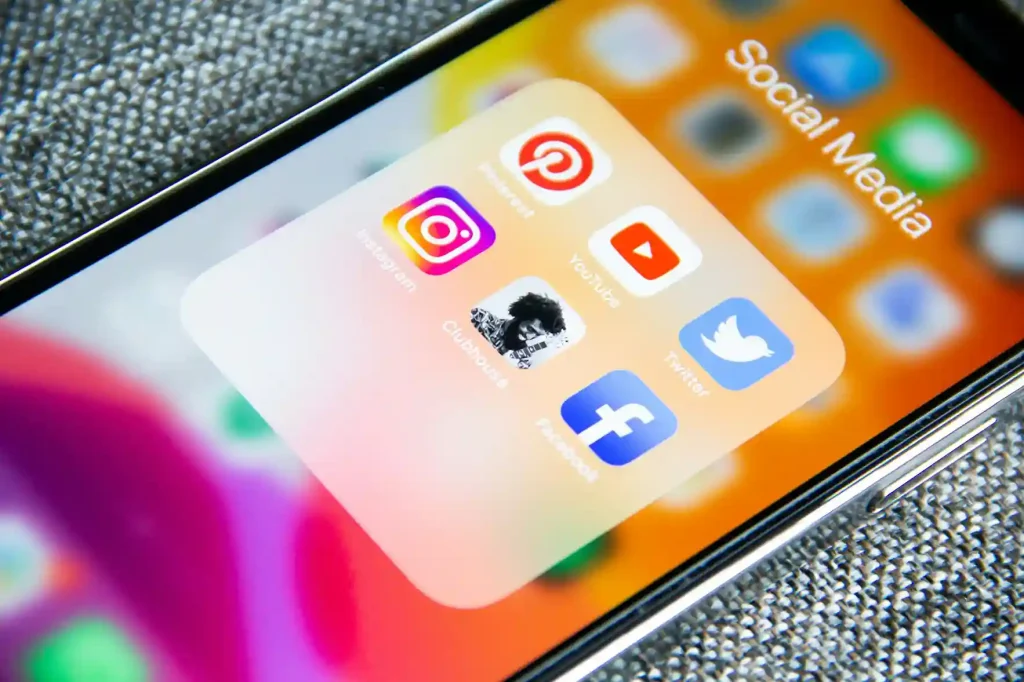
Social media addiction has become one of the fastest-growing behavioral addictions in Pakistan. Excessive use of smartphones, social media platforms, and online content has become increasingly common, especially among teenagers and young adults.
Why Social Media Becomes Addictive
Social media platforms use algorithms that encourage continuous engagement through likes, comments, shares, and notifications.
Consequences
- Anxiety
- Depression
- Low self-esteem
- Reduced attention span
- Sleep disorders
Warning signs
- Spending several hours online every day
- Difficulty focusing on studies or work
- Sleeping late due to phone use
- Feeling anxious when disconnected
- Ignoring family interactions
10. Online Gaming Addiction
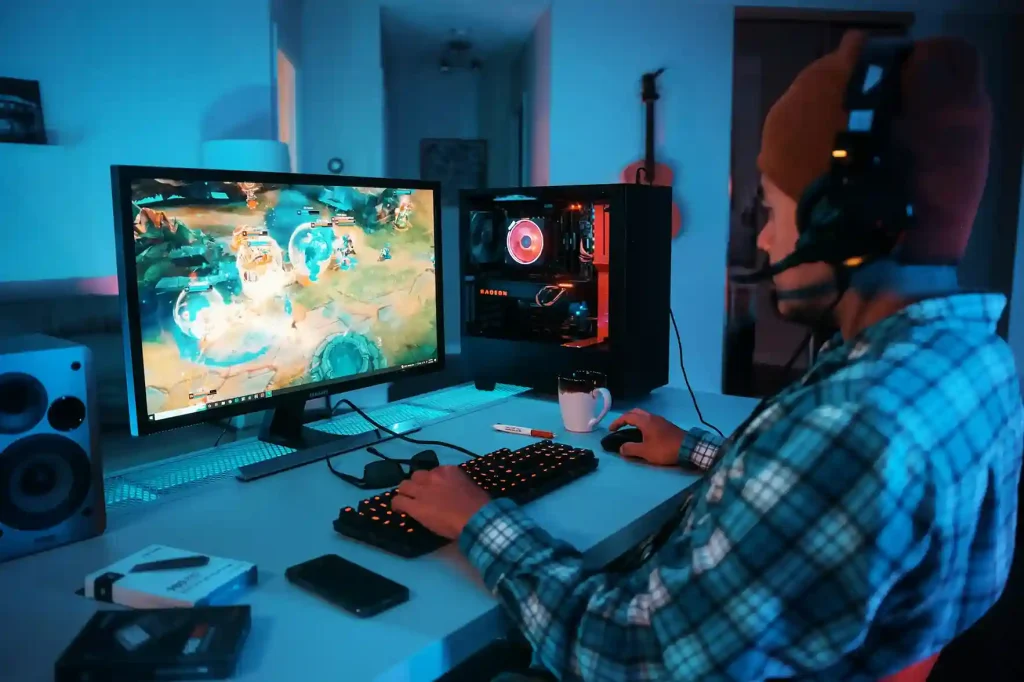
Online gaming addiction can become addictive when it begins to interfere with daily responsibilities. Multiplayer games, competitive ranking systems, and in-game rewards can encourage prolonged play.
Popular Gaming Platforms
- Mobile games
- PC gaming
- Console gaming
- Online multiplayer games
Symptoms of Gaming Addiction
- Playing for extended periods
- Ignoring responsibilities
- Social isolation
- Sleep deprivation
Effects on Health
- Poor academic performance
- Sedentary lifestyle
- Obesity
- Anxiety
- Emotional instability
11. Food Addiction

Some people develop unhealthy dependence on sugary foods, fast food, or highly processed snacks. While food is necessary for life, compulsive overeating can become a behavioral health concern.
Common Triggers
- Stress
- Emotional distress
- Anxiety
- Depression
Signs of Food Addiction
- Loss of control while eating
- Frequent cravings
- Emotional eating
- Feelings of guilt after overeating
Health Risks
- Obesity
- Diabetes
- Heart disease
- High cholesterol
- Hypertension
12. Caffeine and Energy Drink Dependence

Tea and coffee are widely consumed in Pakistan, and moderate use is generally common. However, excessive caffeine intake from strong tea, coffee, energy drinks, or caffeine supplements can lead to dependence.
Common signs
- Headaches when skipping caffeine
- Fatigue without tea or coffee
- Drinking multiple cups daily
- Difficulty sleeping
- Increased anxiety or palpitations
13. Porn Addiction
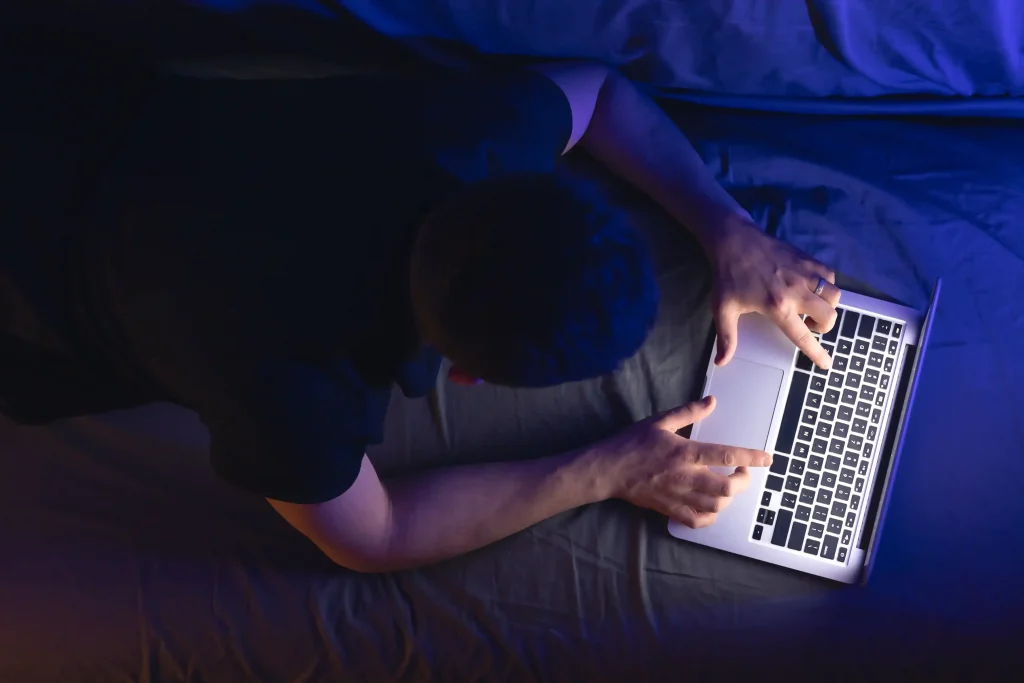
Porn addiction is a growing behavioral addiction in Pakistan that affects individuals of all ages, especially adolescents and young adults with easy access to digital devices and high-speed internet.
Common Reasons People Use Porn
- Sexual pleasure
- Sexual curiosity
- Stress relief
- Escaping loneliness
Health Effects
- Depression and anxiety
- Social isolation
- Relationship conflicts
- Reduced self-esteem
- Difficulty forming healthy intimate relationships
- Decreased productivity and concentration
Bright Way Rehab is the leading addiction treatment in Lahore, offering all the above problem solutions in one place. Contact our professional today at 0305-4566001 for lasting results. Early intervention can make a life-changing difference.