Warning Signs and Symptoms of Drug Addiction
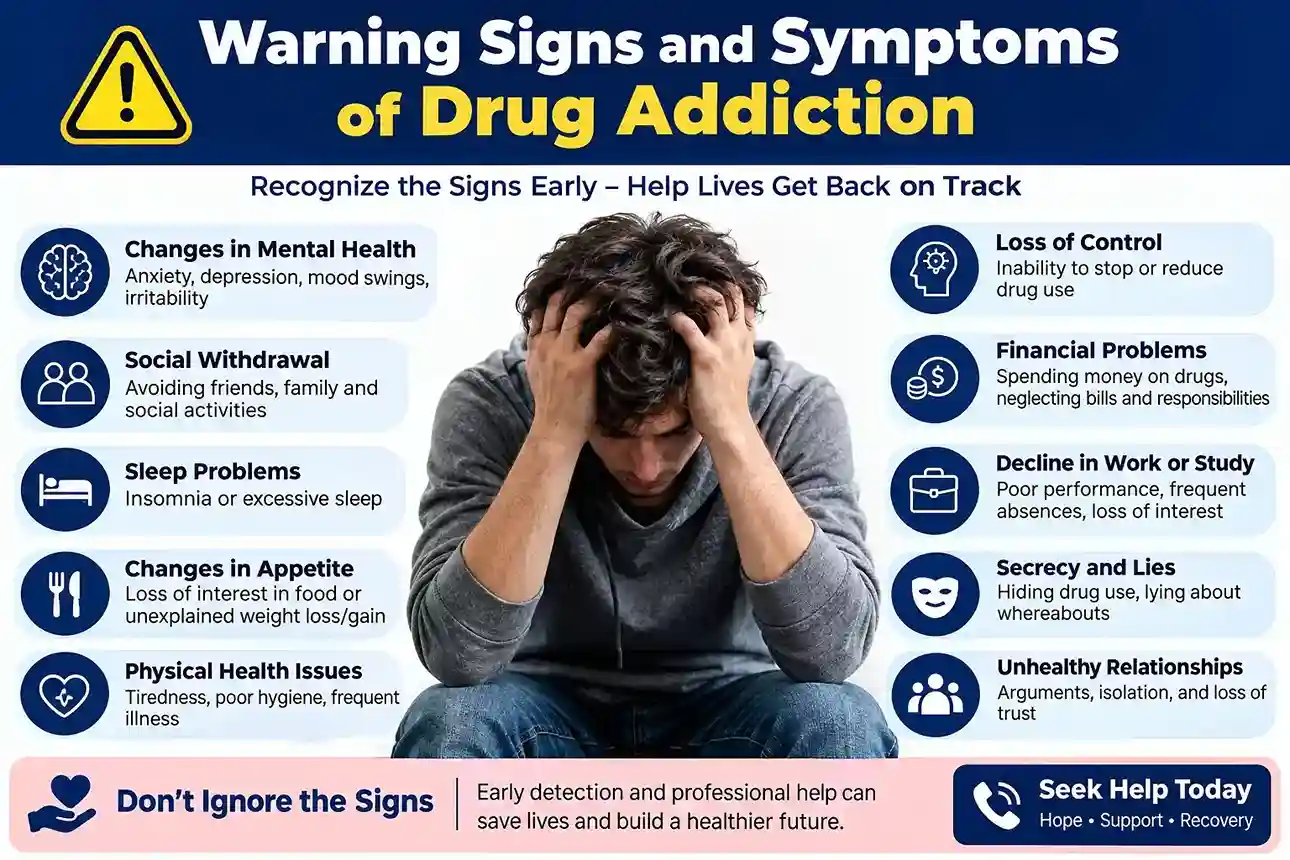
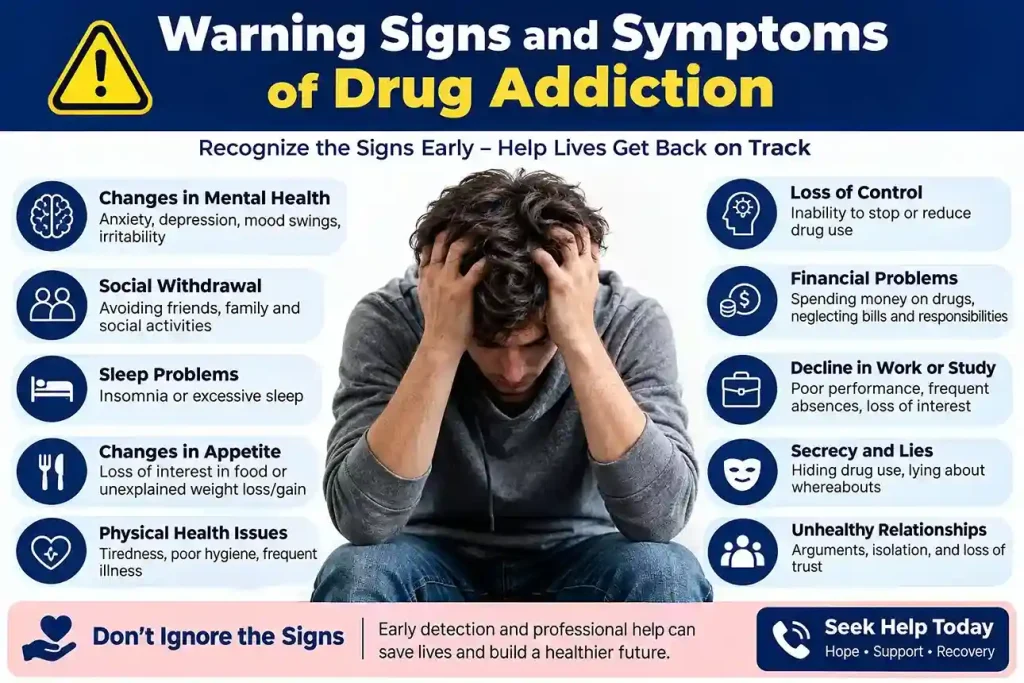
Drug addiction rarely appears overnight. It is formed gradually through small changes in behavior, mood and physical health that gradually decrease until the problem is under control. Millions of people across the country struggle with substance abuse, but most families recognize warning signs only after months or years of use, according to Pakistan’s National Drug Use Survey. Learning to recognize these symptoms early can mean the difference between silent intervention and a complete crisis.
This guide breaks down the physical, psychological and behavioral symptoms of drug addiction, where they first appear — at home, at work, or at school, even online — and when you want to look for them.
What is the Drug Addiction?
Drug addiction, known clinically as substance use disorder (SUD), is a chronic brain condition where a person continues to use the substance despite damage to their health, relationships and daily responsibilities. According to DSM-5 (diagnostic manual used by sophisticated sealers), the condition is diagnosed based on the following criteria: control of use, withdrawal, tolerance, withdrawal symptoms, and persistent negative consequences.
Only a qualified doctor or psychiatrist can make a formal diagnosis of substance use disorder — but family members, friends and employers usually see the warning signs first.
Physical Signs of Drug Addiction
Emotional symptoms are often the easiest to feel, as they are easily triggered by the user.
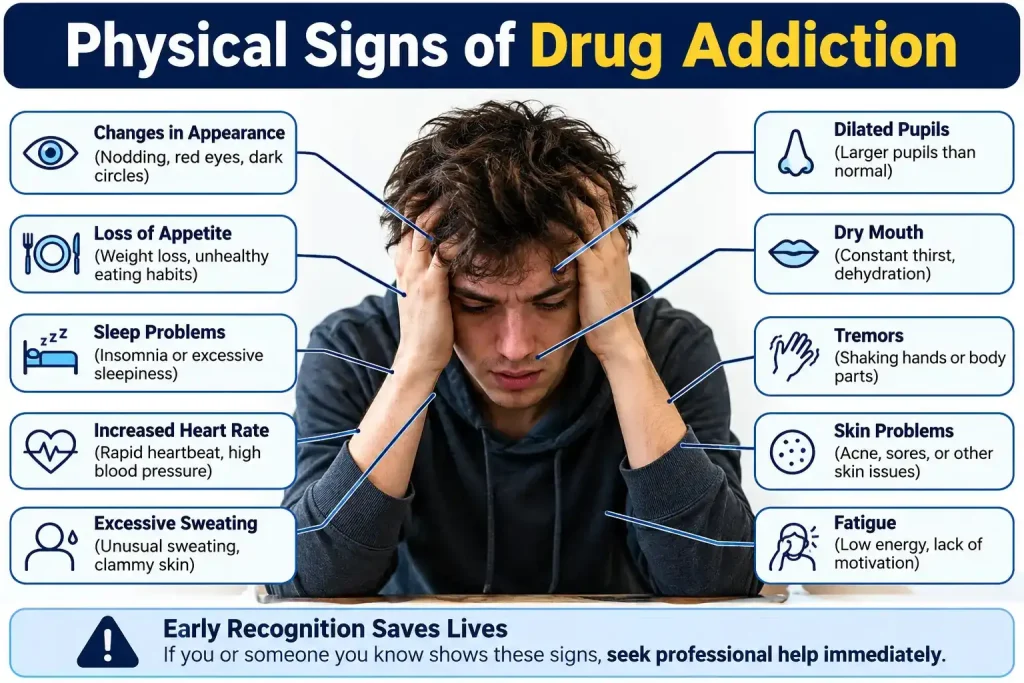
- Bloodshot or crowded eyes, or pupils that are unusually large or small.
- Weight loss or weight gain
- Poor coordination, shock, or blurred speech
- Changes in sleep patterns – insomnia or excessive sleepiness
- Poor personal hygiene and appearance
- Frequent nosebleeds (common with certain medications) or skin changes such as acne or jaundice or paleness
Unusual odour in the person’s clothes, smell clothes or person’s area room home
Emotional and Psychological Signs
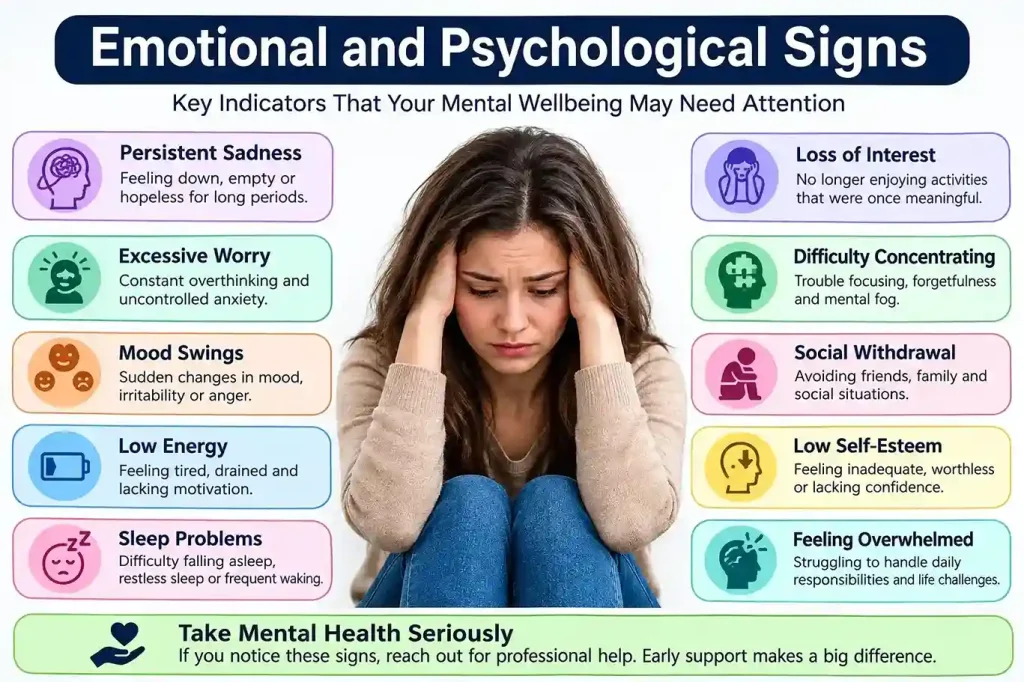
Addiction affects the brain’s reward system, which manifests itself in emotional and mood swings.
- Sudden change in mood or aggression
- Increased anxiety, paranoia, or fear of the unknown
- Periods of depression or hopelessness
- Loss of motivation and interest in previously enjoyed activities
- Low self-esteem or feelings of guilt and shame
- Difficulty concentrating
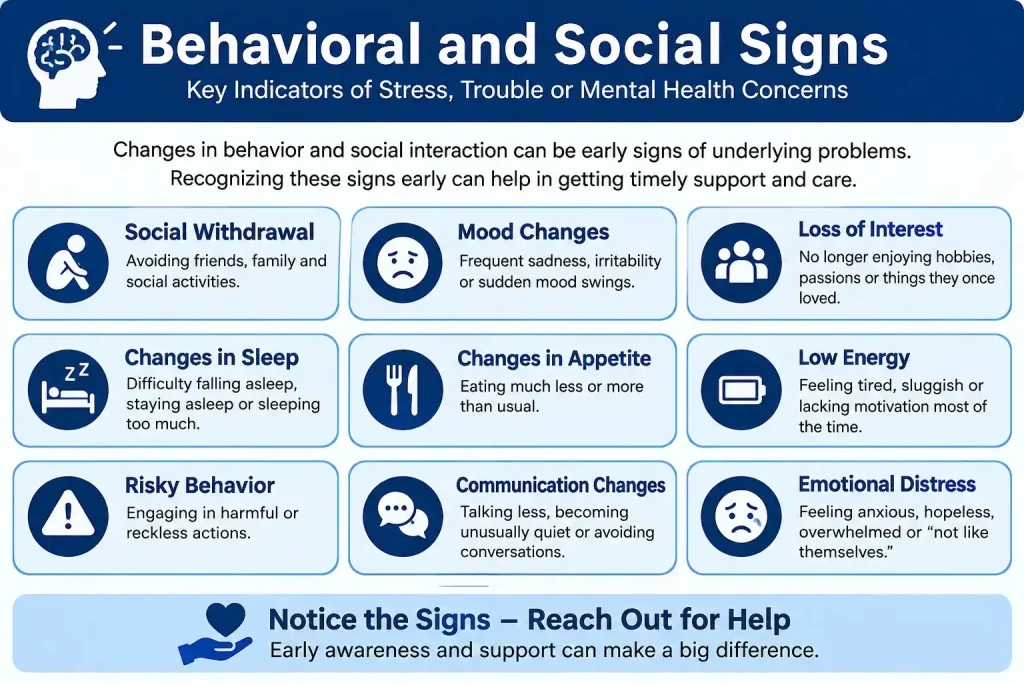
Behavioral and Social Signs
These symptoms usually appear before they appear, especially in the early stages of addiction.
- Involvement in confidentiality-closing statements, avoiding talking to you, talking about the whereabouts
- Ignoring those responsible for home, school or work
- Change or social return to friends circle
- Financial problems, unexplained debt, or the disappearance of valuables
- Risk-taking behaviour, reckless driving or unsafe decisions
- When asked about behavior or defence
Where to show signs – home, work/school and online
Intoxication does not show the same symptoms everywhere. Recognizing that it can manifest itself in a person’s life in different ways can make it easier to catch him early.
Signs Family Notices at Home
Families often get the feeling that something is wrong before they can name it. Common symptoms in the home include unexplained mood swings, disruption of sleep schedules, mood swings at certain times of the day, or loss of valuables, and a general sense of emotional distance from the rest of the home.
Signs Teachers and Employers Notice
At school or work, addiction appears as a decrease in performance. The teachers can see falling grades, frequent absences, or a student who can’t get me engaged. Today, people often report poor punctuality, illness, unexplained days and a change in the way they communicate with their team. Feeling passionate about undermining their family relationships, the signs are sometimes seen here first – and reported later, whether they are or not, due to fear of stigma.
Digital and Online Warning Signs
A new, often overlooked category of warning signs is emerging from phones and social media. Look for:
- Unusual or unexplained online purchases or money transfers
- Clearly visible, unknown contacts and new numbers are often stored under obscure names.
- Deleted call logs, chat history, or browser history
- Unusual late-night phone activity or vague messaging
- Notable changes in social media behavior-changes in the type of featured or disabled, deleted messages, or content to be shared.
Drug-Specific Warning Signs
Different substances produce different patterns of use. Identifying specific symptoms of a substance can help determine what type of addiction you have – and the type of treatment you need.
Symptoms of heroin use
Limited numbers, or “stop moving”, colloquial words, a hundred marks on the arm, and possession of a spoon-like lighter or syringe. Learn more about treating heroin and meth addiction in Lahore.
Use ice symptoms (crystal meth or ice nasha)
Hyperactivity is followed by periods of fatigue, dilated pupils, rapid weight loss, picking skin lesions, grinding teeth and waking up for several days at a time. Read about the treatment of ice addiction in Lahore.
Symptoms of cannabis (hashish/marijuana) use
A rough sound, an increased sense of smell, slow reactions, and a specific long-lasting and blurry or erratic behavior.
Signs of Prescription Drug Misuse
Taking more than recommended doses, visiting multiple doctors of the same drug, taking the drug to feel “normal”, and feeling withdrawal symptoms once the drug is completed.
Signs of Drug Addiction in Teenagers vs Adults
Warning signs of addiction may look different depending on age.
Teenagers’ addiction often manifests as a significant decrease in academic performance, secret phone use, a new peer group, rebellious or deviant behavior, and mood swings beyond normal adolescent behaviour.
Performance priority patterns, financial stress, conflict, and/or substance addiction over time can all contribute to symptoms in adulthood, frequently as a result of fear of shame and the loss of family dignity.
Self-Assessment: Is It Time to Seek Help?
Ask the following questions if you’re unsure whether what you see is an indication of what you hear or a real warning:
Has the man been more reticent about his identity?
Have you observed any notable shifts in their look, conduct, or mood?
Do they consistently neglect responsibilities to their families, jobs, or schools?
Has valuables or money been stolen?
Do they get defended or dismissed when you respond?
Has their friendship or social circle changed?
If you answered yes to these questions, you can say that it is time to have an honest conversation.
When to Seek Professional Help
Addiction is treatable, but it is rarely solved. If you find yourself with a theory that you’re emotionally and behaviorally unstable – especially if they’re getting worse – it’s important to talk to someone about it. Better early results, shorter recovery timelines, and less damage to relationships and health.
How Bright Way Rehab Can Help
Brightway Rehab is a leading addiction treatment centre in Lahore, offering confidential medical supervision and experienced personal counselling for families of individuals throughout Pakistan. From drug abuse and alcohol addiction to type 2 and behaviour, there are licensed psychiatrists and drug consultants available to help – whatever.
If you see any of these symptoms in someone you love, you don’t have to wait for any progress. Contact our team to book in negotiations for your book today, and give us a call on 0300-8457742 to speak. Treatment may involve different approaches depending on the substance and the individual’s circumstances, including:
- Medical assessment
- Medically supervised withdrawal management
- Behavioral therapy
- Individual counseling
- Family counseling
- Peer and recovery support
- Relapse-prevention strategies
- Treatment for co-occurring mental health conditions
- Ongoing aftercare and recovery planning
Frequently asked questions
What are your symptoms?
Early symptoms are usually behavioral — including confidentiality, withdrawal from family and friends, and distrust of responsibilities — as they appear before symptoms appear.
Can signs of drug addiction be mistaken for something else?
Indeed, stress or changes in another group’s health may interact with mood swings, depression, or withdrawal. The disruption of drug usage can only be confirmed by a positive diagnosis.
Does it take family members time to notice your information?
Studies have shown that families can take years to detect, especially when the information you provide prevents harm to you or someone else.
Early detection of notable, subtle behavioral changes is crucial.
If a family member displays any of these signs, what should I do?
Don’t try to be combative when discussing any course of action, including safe and successful solutions, with an addiction professional.
Is drug addiction diagnosed only by a doctor?
Yes, although family and friends can recognize warning signs, only a licensed doctor or therapist can make a formal diagnosis of substance use disorder using medical standards.